A site diary is simply a reliable record of what was happening on a given day. Most disputes on site come down to whether something was noted at the time, and a photograph with a date and a location settles that quickly. SnagDesk is a snagging tool, but the same structure works well as a photographic site record.
How to use SnagDesk as a site record
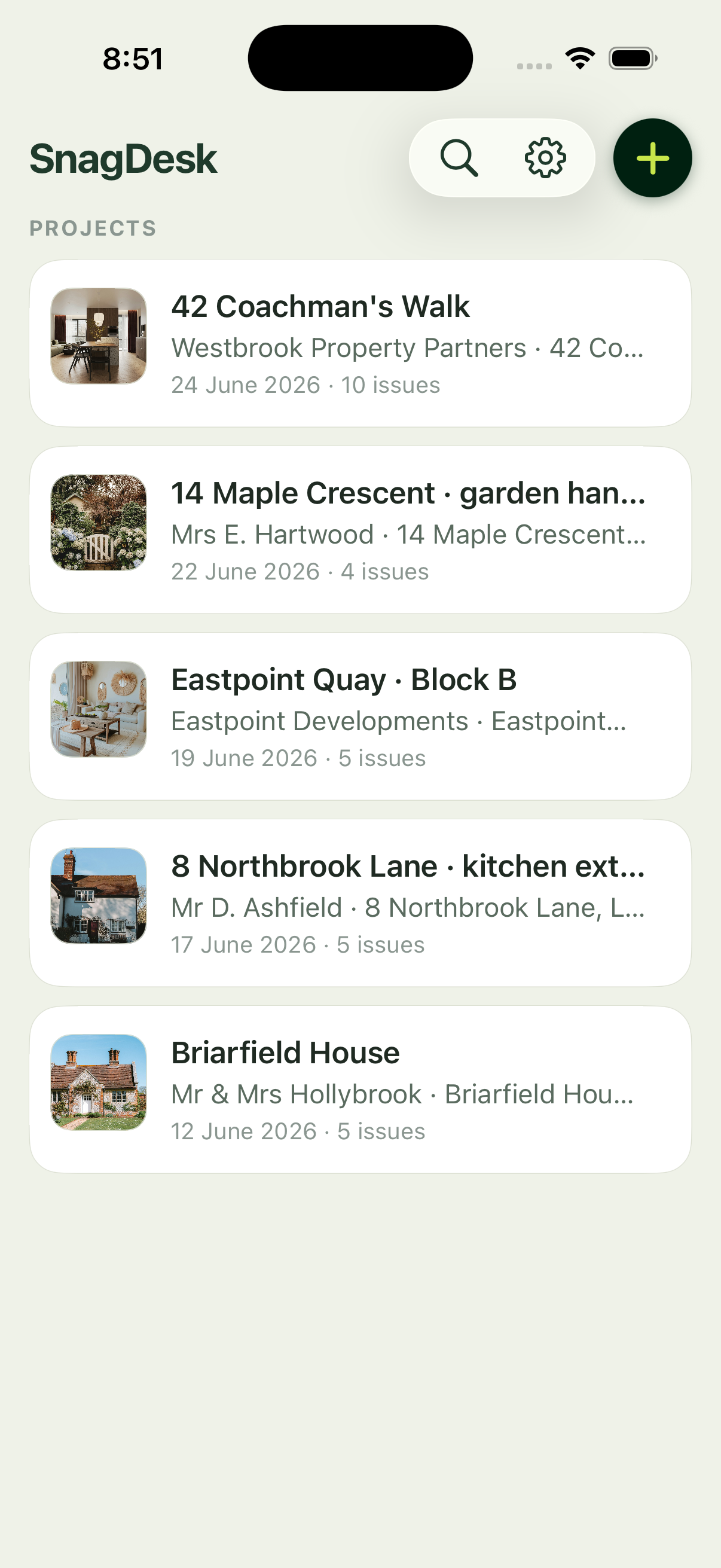
Create a project for the site, with the address and the relevant dates. On each visit, log what you see the same way you would log a snag: a photograph, a location, and a short description of the observation. Because every entry carries its own image and location, the record is specific rather than a paragraph of recollection.
What is worth recording
- Progress at a given stage, before it is covered up by later work.
- Conditions that affect the programme, such as weather damage or access problems.
- Defects and damage as they appear, with the date they were first seen.
- Anything you would want evidence of later if it becomes contested.
Why photographs beat notes
A written note relies on being believed. A photograph of the same thing, marked up to show exactly what you mean, does not. When you need to show that a defect existed before a certain date, or that an area was left in a particular state, an image with a location attached is the strongest record you can keep.
Exporting the record
When you need to share or file the record, generate a branded PDF. Everything you logged appears with its photograph and location, in a document you can email or archive. It all works offline, so a site with no reception is no obstacle.
See projects and locations, or read about branded PDF reports.