Handover is where a job is judged. Practical completion means the works are finished enough for the client to take possession, with any remaining defects recorded and scheduled. The quality of that record decides whether the final weeks are smooth or spent arguing about who agreed to what.
What practical completion actually means
Practical completion is the point at which the building is fit for its purpose and the client can occupy it, even though minor defects may remain. It usually triggers the start of the defects liability period, during which the contractor returns to put right anything recorded. Because it shifts responsibility and starts a clock, the defect list attached to it matters a great deal.
What to record at handover
Everything outstanding, with evidence. That means the small finishing items as well as anything more significant, each with a photograph, a location and a description. An item that is not recorded at handover is much harder to raise later, and an item recorded vaguely is easy to dispute.
Keep the list clean and per location
Grouping defects by plot, unit or room is what makes the list workable. A trade can be sent to a single location with a clear set of items rather than a flat list of fifty entries. SnagDesk tags every snag to a location, so the report comes out organised rather than as a pile.
Producing the handover report
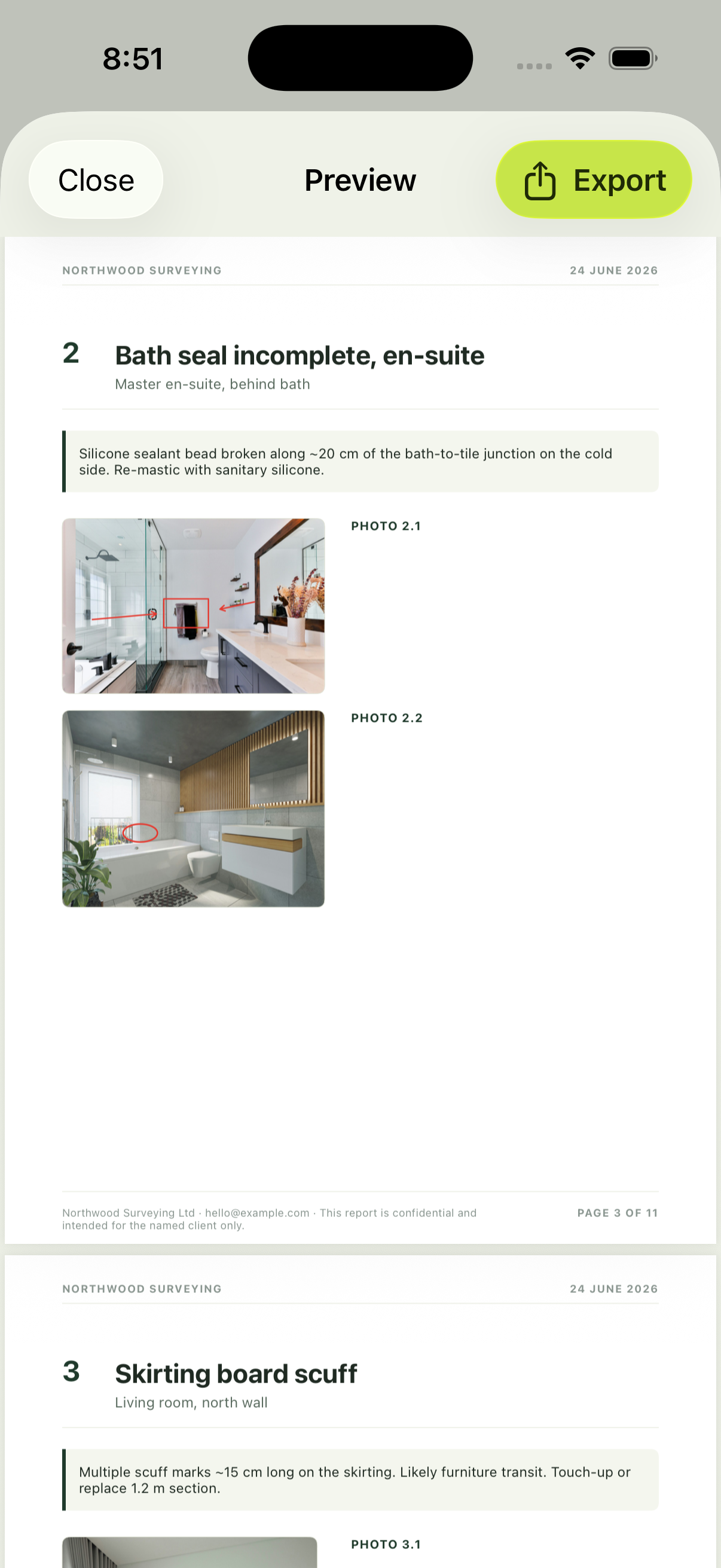
The document you hand over should look like a professional record: numbered items, photographs, locations, and your company details on every page. That is what gets signed off and what protects both sides if a question comes up months later. SnagDesk generates it on your phone as soon as the walk is done.
Read the new build snagging guide, or see how branded PDF reports are produced.