A commercial fit-out compresses a lot of trades into a short programme, and the snagging at the end is usually done under time pressure with the client already planning to move in. The risk is a rushed list that misses items, or one so disorganised that nobody can act on it before the deadline.
Inspect by area, then by trade
Fit-outs are easiest to snag area by area: reception, open plan, meeting rooms, kitchen, WCs, plant. Within each area, work through the trades in a consistent order so the same categories get checked every time. That gives a list that can be split and sent to the right contractor without rewriting it.
What to look for
- Finishes: paint coverage, wall protection, floor joins and transitions, ceiling tile alignment.
- Joinery: reception desks, kitchen units, doors and ironmongery, alignment and damage.
- Services: sockets and data points, lighting, sensors, grilles and diffusers sitting flush.
- Glazing and partitions: seals, alignment, manifestation, door closers.
- Cleanliness and protection: marks from the works, protection left in place or removed.
Record defects so they can be split
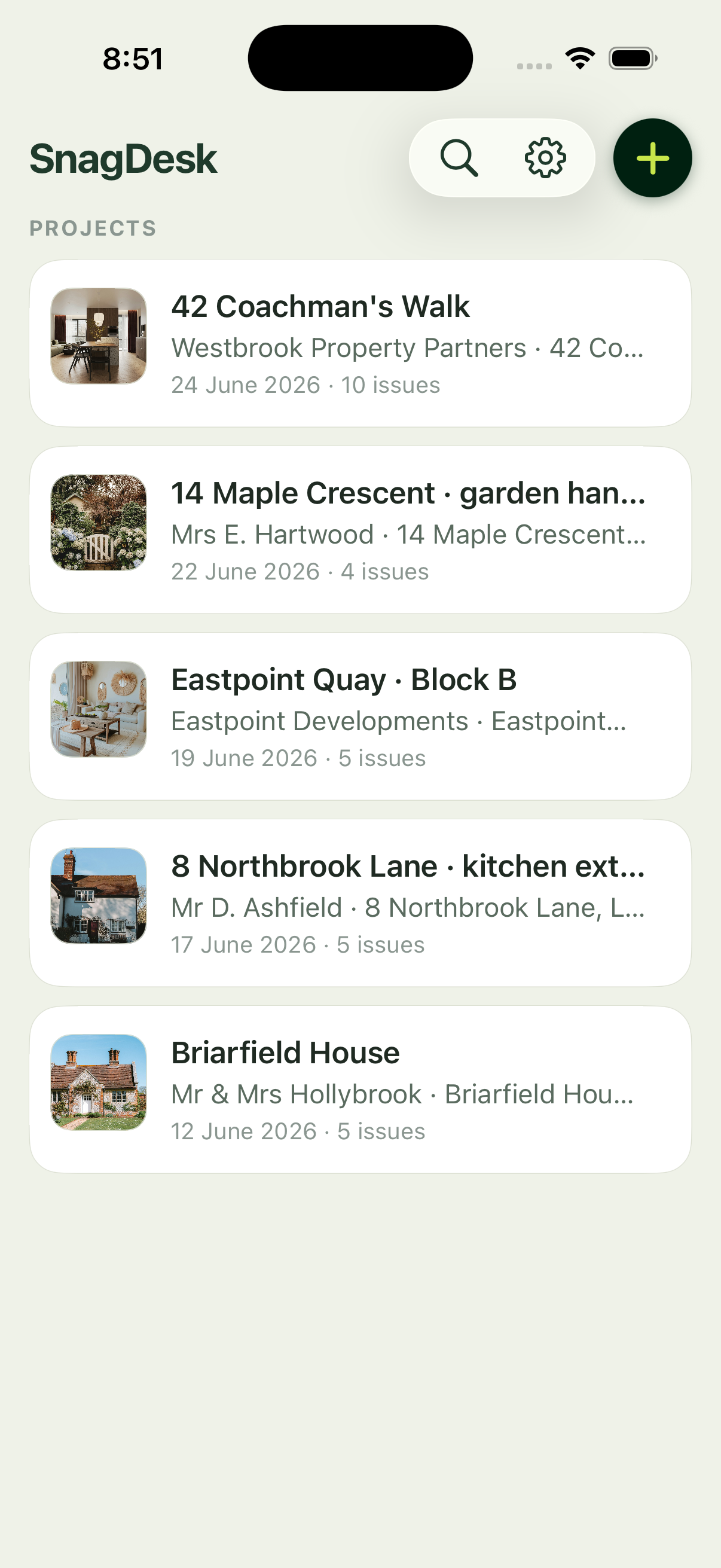
Because a fit-out involves many contractors, a defect needs enough detail for the right trade to own it. A photograph, a specific location and a plain description are the minimum. SnagDesk tags each snag to a location so the report can be handed to a trade for their area without editing.
Report while you are still on site
On a tight programme, the value of a report drops by the hour. Generating it on your phone before you leave means the trades can start closing items the same day rather than waiting for a write-up.
See projects and locations, or read about handover snagging.