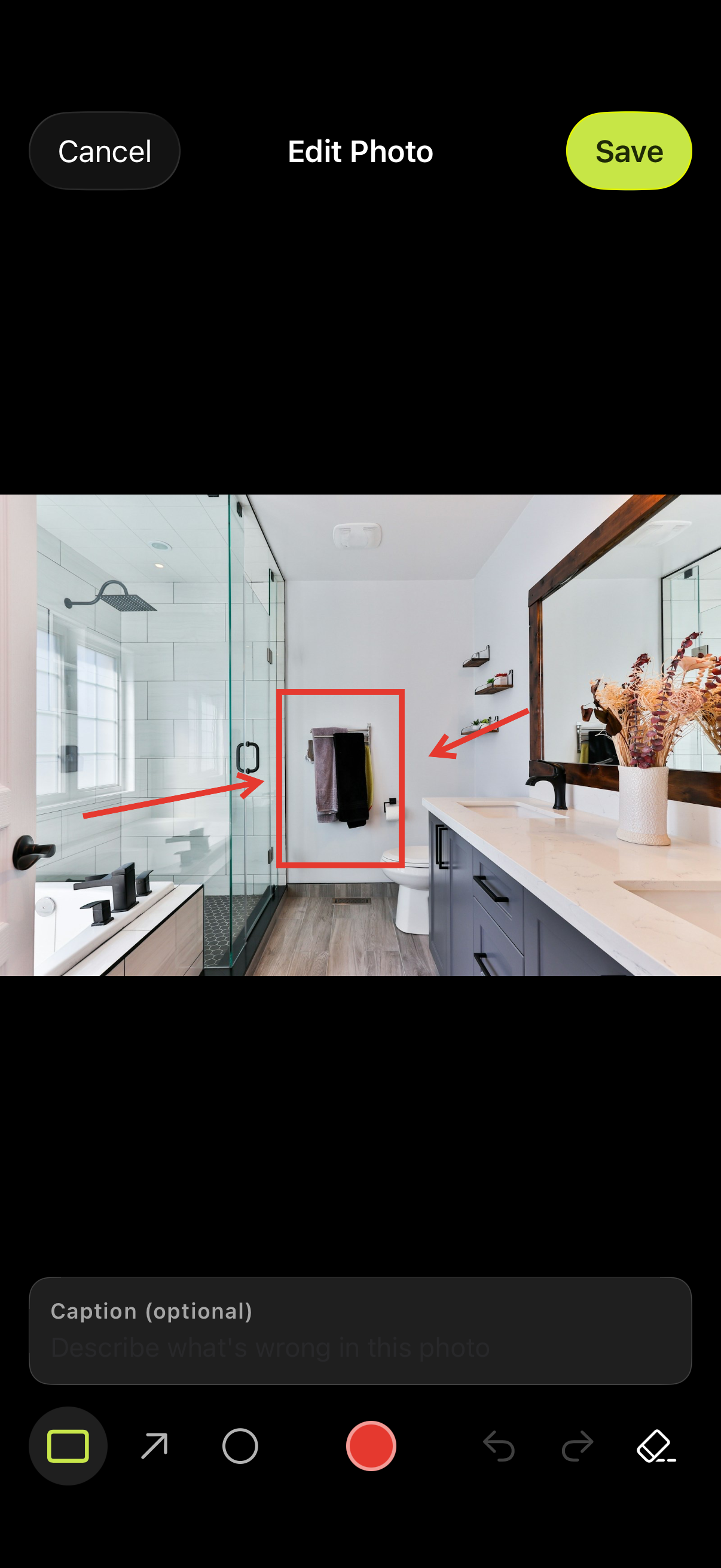
Snagging a new build means going through a finished property and recording everything that has not been built or finished to standard, before it becomes your problem to live with. Done properly it is methodical, photographed and specific. Done badly it is a vague list that the developer can argue with for months.
When to snag a new build
The most useful time is just before or at handover, once the property is complete but before you have moved in and filled it with furniture. An empty property is far easier to inspect: floors, walls and skirtings are all visible, and there is nothing to move. Many developers also operate a defects period after completion, so issues found later can still be raised, but the earlier the record exists the stronger your position.
What to look for, room by room
Work through the property in a fixed order so nothing gets skipped. In each room, look at the same categories: walls and ceilings, floors, doors and windows, sockets and switches, and any fitted units.
- Walls and ceilings: cracks, uneven finish, paint coverage, visible joints or nail pops.
- Floors: lifting boards, gaps at skirtings, scratches, uneven tiling or grout.
- Doors and windows: catching on frames, gaps in seals, handles and locks, trickle vents.
- Kitchens and bathrooms: sealant beads, cupboard alignment, tiling, taps, waste connections.
- Electrics and heating: sockets sitting proud or crooked, switches, radiator brackets, smoke alarms flush to the ceiling.
- Outside: render and brickwork, guttering, external taps, driveway and paths.
How to record a snag properly
A snag a developer can act on has three things: a photograph that clearly shows the defect, a location precise enough to find it, and a short description of what is wrong. "Scratch in bedroom" is weak. "Bedroom 2, window cill, 40mm scratch in paint on the left return" is not arguable.
Marking up the photo makes the biggest difference. A box or circle drawn on the image removes the guesswork, which is why SnagDesk keeps the photo and the markup together in one step.
How many snags is normal?
A thorough inspection of a new build commonly turns up dozens of items, and most of them are small: paint finish, sealant, adjustment of doors. A long list is not necessarily a sign of a bad build, it is usually a sign of a careful inspection. What matters is that each item is specific and evidenced.
Turning the walk into a report
The list is only useful if it reaches the developer in a form they can work from. A numbered, photographed, located report is far more likely to get actioned than a text message or a verbal list. With SnagDesk the report is generated on your phone as soon as the walk is finished, branded and ready to email.
See photo capture and markup, or read about handover and practical completion snagging.